The search terms report is a powerful diagnostic tool within Google Ads that reveals exactly what search queries trigger your ads. This intelligence is crucial for campaign optimization and budget efficiency. In our negative keywords article, we explored how maintaining strategic negative keyword lists prevents wasted ad spend and improves performance metrics. The search terms report serves as your primary source for identifying these optimization opportunities.
As a digital marketing professional, I've found that regular search terms analysis is non-negotiable for maintaining profitable campaigns and staying ahead of market shifts.
Search Terms Report
Understanding the distinction between search terms and keywords is fundamental to effective campaign management. Keywords are your targeted bid terms—the specific phrases like "+excel +classes" that you strategically select and bid on. Search terms, however, represent the actual queries users type into Google that trigger your ads. With broad match keywords, this difference becomes particularly significant. For instance, your broad match keyword "excel classes" might trigger ads for searches like "excel classes for remote workers" or even "excel classes versus PowerBI training." The search terms report reveals these connections, often surfacing unexpected query patterns that can inform both negative keyword strategies and new campaign opportunities.
Keywords vs Search Terms: Understanding the Difference
| Feature | Keywords | Search Terms |
|---|---|---|
| Definition | Words you bid on | Actual user searches |
| Control Level | You set these | Users generate these |
| Example | +excel +classes | excel classes for beginners who like pizza |
| Purpose | Campaign targeting | Performance insights |
Negative Keywords
Strategic negative keyword management, as detailed in our keyword mastery article, ensures every click represents genuine business potential. The search terms report is your early warning system for irrelevant traffic that could drain your budget. When running broad match campaigns, this vigilance becomes even more critical. I once managed a campaign for a financial services client where a viral social media trend suddenly made their brand name slang for something completely unrelated—our search terms report caught thousands of irrelevant impressions within hours, allowing us to quickly add negative keywords and preserve budget for qualified leads. This type of brand monitoring and quick response can mean the difference between a profitable campaign and a budget disaster.
Common Search Terms Issues to Watch For
Brand Confusion
When similar company names or new products cause irrelevant traffic. Regular monitoring helps catch these issues early before budget waste occurs.
Broad Match Expansion
Broad match keywords can trigger unexpected search terms. Review these regularly to maintain campaign relevance and performance efficiency.
Irrelevant Variations
User searches may include unrelated terms or contexts. Building comprehensive negative keyword lists prevents wasted ad spend on poor matches.
Without regular search terms monitoring, you risk paying for completely irrelevant clicks that drain your budget and lower campaign performance.
Keeping up with the Industry
Beyond optimization, the search terms report functions as a real-time market research tool that reveals evolving customer behavior and emerging opportunities. Consider how search patterns shifted dramatically during 2020-2022: businesses teaching Excel skills witnessed massive increases in searches for "excel classes online," "remote excel training," and "virtual spreadsheet courses." Smart marketers who monitored their search terms reports could pivot quickly, adjusting ad copy, landing pages, and service offerings to meet this surge in demand. In 2026, we continue to see evolving search patterns around AI-integrated tools, hybrid work solutions, and sustainability-focused business practices—all trends that surface first in search behavior before becoming mainstream business opportunities.
Industry Intelligence Benefits
Market Trend Detection
Search terms reveal shifting customer behavior and emerging needs. This data helps you adapt your offerings to match current demand patterns.
Opportunity Identification
New search patterns indicate business opportunities. The pandemic example shows how online Excel classes became more relevant through search data.
excel classes onlineCreate and Automate the Search Terms Report
In Google Ads, navigate to the top menu bar and click "Reports," then select "Reports" from the dropdown menu
This directs you to your reports dashboard, which displays all existing saved reports (this may be empty if you're setting up reports for the first time)
Click "View all" to access the complete library of available report templates
From the predefined reports section, locate and select "Search terms" to generate your baseline report
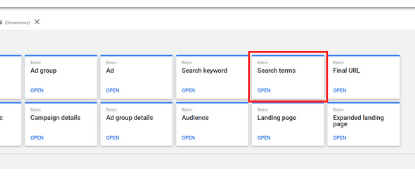
Google Ads will generate a comprehensive search terms report with default metrics and date ranges
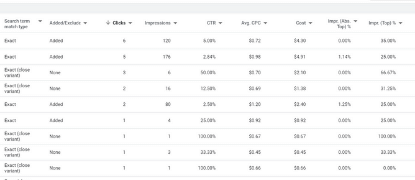
Customize the report by adjusting date ranges, selecting relevant columns (impressions, clicks, conversions, cost-per-conversion), and filtering by campaign or ad group to focus your analysis
Once your report configuration meets your analysis needs, click "Save" in the top right corner and assign a descriptive name like "Weekly Search Terms - Brand Campaign"
To ensure consistent monitoring, click "Schedule" in the top right to set up automated email delivery—weekly reports work well for most campaigns, though high-volume accounts may benefit from daily reports during optimization phases
Keywords vs Search Terms: Understanding the Difference
| Feature | Keywords | Search Terms |
|---|---|---|
| Definition | Words you bid on | Actual user searches |
| Control Level | You set these | Users generate these |
| Example | +excel +classes | excel classes for beginners who like pizza |
| Purpose | Campaign targeting | Performance insights |
Master Digital Marketing
Search terms analysis represents just one component of comprehensive campaign optimization. To develop expertise across all aspects of digital marketing strategy, from advanced keyword research to conversion optimization and attribution modeling, explore our digital marketing courses & bootcamp.
Search terms analysis is one component of comprehensive digital marketing mastery. Combine this knowledge with broader strategic learning for maximum impact.