What is PPC or Paid Search?
Every day, millions of people turn to search engines like Google and Bing to find products, services, and information. What many don't realize is that those first 3-5 results at the top—the ones marked with a small "Ad" label—represent a sophisticated advertising ecosystem worth hundreds of billions of dollars annually. These paid search results, also known as Pay-Per-Click (PPC) advertising, form the backbone of how search engines monetize their platforms while connecting businesses with potential customers at the exact moment of intent.
The concept is elegantly simple: advertisers bid on keywords relevant to their business, paying only when someone clicks their ad. Apple might pay to appear when someone searches for "smartphones," while Nike could target "running shoes." This creates a win-win scenario where users find relevant products, businesses reach qualified prospects, and search engines generate revenue. While these paid advertisements occupy prime real estate at the top of search results, the unpaid "organic" results below them are governed by Search Engine Optimization (SEO) principles. For this deep dive, we'll focus exclusively on Paid Search, also known as Search Engine Marketing (SEM), and how savvy marketers leverage it to drive business growth.
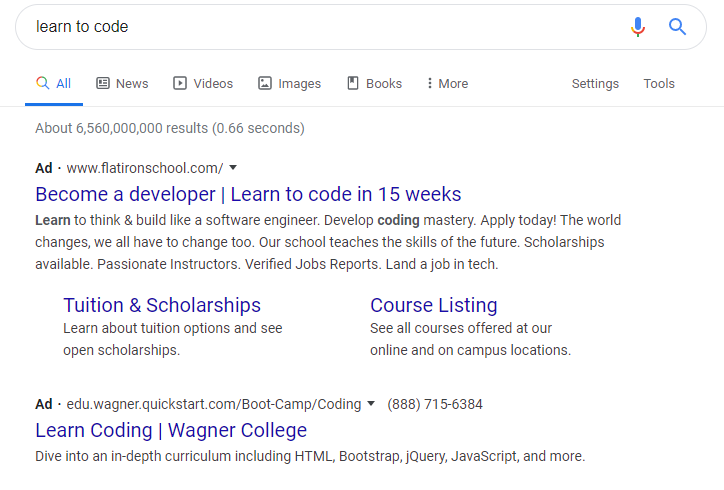
Paid Search vs Organic Results
| Feature | Paid Search (SEM) | Organic Results (SEO) |
|---|---|---|
| Position | First 3-5 results | Below paid ads |
| Cost Model | Pay per click | No direct cost |
| Time to Results | Immediate | Weeks to months |
| Identification | Marked with 'Ad' | No special marking |
| Control | High control over targeting | Limited direct control |
How Do Auctions Work?
Behind every search query lies a lightning-fast auction system that would make Wall Street traders envious. In the milliseconds between when someone hits "search" and results appear on their screen, search engines like Google conduct a complex sealed-bid auction to determine which ads appear and in what order. Unlike traditional auctions where bidders can see competing offers, PPC auctions are blind—advertisers submit their maximum bids without knowing what competitors are willing to pay.
The winning formula isn't simply about who bids the highest dollar amount. Instead, Google calculates an "Ad Rank" for each advertiser—a sophisticated algorithm that weighs bid amount against ad quality, relevance, and user experience factors. The advertiser with the highest Ad Rank secures the coveted first position, while subsequent positions are filled in descending order. This system ensures that users see the most relevant, high-quality ads rather than simply those from the deepest pockets, maintaining the integrity of the search experience while maximizing revenue for both advertisers and the platform.
Google Ads Auction Process
User Enters Search Query
When someone searches on Google, an automated auction is triggered in milliseconds to determine which ads will appear.
Sealed Bid Competition
Advertisers compete in a sealed auction where no participant knows the bids of competitors, ensuring fair competition.
Ad Rank Calculation
Google calculates Ad Rank for each eligible ad using multiple factors including bid amount, quality score, and relevance.
Position Assignment
Ads are ranked by Ad Rank score, with the highest scoring ad appearing in position 1, followed by lower scoring ads.
Every Google search triggers a real-time auction that completes in milliseconds, determining which ads appear and in what order based on Ad Rank calculations.
Ad Rank
Understanding Ad Rank is crucial for any serious digital marketer, as it determines not just whether your ads appear, but where they appear and how much you pay. Google's algorithm evaluates six critical factors when calculating Ad Rank, each playing a vital role in your campaign's success:
Your bid—referred to as Max CPC (Cost Per Click), this represents your maximum willingness to pay for a single click on your ad for a specific keyword. However, higher bids don't guarantee top positions if other factors are weak. Smart advertisers focus on optimizing all ranking factors rather than simply outbidding competitors.
The quality of your ads and landing page—Search engines prioritize user experience above all else. Google's algorithms evaluate whether your ad copy matches search intent and whether your landing page delivers on the ad's promise. An ad for "organic dog food" that leads to a generic pet store homepage will score poorly, while one leading directly to organic dog food products with detailed information will excel.
Ad Rank thresholds—Google maintains minimum quality standards that ads must meet to appear at all. These dynamic thresholds prevent irrelevant or low-quality ads from cluttering search results, regardless of bid amount. Advertisers promoting unrelated products or using misleading copy may find their ads blocked entirely.
The competitiveness of the auction—Market dynamics heavily influence costs and positioning. Highly competitive industries like insurance, legal services, or business software often see significantly higher costs per click as numerous advertisers compete for the same valuable keywords. Understanding your competitive landscape helps inform realistic budget expectations.
The context of the search—Modern advertising is increasingly contextual, with factors like the searcher's location, device type, time of day, and search history influencing ad relevance. A local restaurant's ad will perform better for nearby searchers during meal times, while B2B software ads may rank higher during business hours on desktop devices.
Ad extensions and other formats—Extensions that add phone numbers, additional links, location information, or product images don't just make ads more informative—they signal to Google that you're providing comprehensive, user-friendly information. Well-implemented extensions can significantly boost Ad Rank while improving click-through rates and user experience.
Six Factors Affecting Ad Rank
Your Bid (Max CPC)
The maximum amount you're willing to pay for a click on your ad for a specific keyword.
Ad and Landing Page Quality
Google evaluates the relevance and quality of your ads and landing pages to ensure they serve searcher needs.
Ad Rank Thresholds
Minimum Ad Rank requirements that ads must meet to be eligible to appear in search results.
Additional Ad Rank Factors
Auction Competitiveness
Higher competition from multiple advertisers increases cost per click and affects ranking dynamics.
Search Context
Location, device type, time of day, and other contextual factors influence your ad's ranking potential.
Ad Extensions
Additional features like phone numbers, site links, and location information that enhance your ad's value.
How to Improve Ad Rank
Rather than simply encouraging advertisers to bid higher, Google provides a roadmap for improving ad performance through quality optimization. The platform's Quality Score—a diagnostic tool rated from 1 to 10—breaks down into three measurable components that directly impact your Ad Rank and, ultimately, your return on investment:
Expected CTR (Click-Through Rate)—Google's machine learning algorithms analyze historical performance data to predict how likely users are to click your ad when it appears. This prediction accounts for ad position and considers factors like compelling headlines, clear value propositions, and alignment with user intent. Ads with higher expected CTRs often achieve better positions at lower costs, as Google rewards engaging content that keeps users on the platform.
Ad Relevance—This measures how closely your ad copy aligns with the searcher's query and intent. Google's natural language processing evaluates whether your ad directly addresses what users are looking for. An ad for "black coffee mugs" that includes those exact terms and related concepts like "ceramic," "kitchen," or "drinkware" will score higher than generic ads about "great products" or "amazing deals."
Landing page experience—The user journey doesn't end with the click—it begins there. Google evaluates whether your landing page loads quickly, provides relevant information, offers clear navigation, and follows mobile-friendly design principles. Pages that immediately present the products or information promised in the ad, with clear calls-to-action and professional design, consistently outperform generic or slow-loading alternatives.
These three components combine to create your overall Quality Score, visible at the keyword level within your Google Ads account. Each component receives a rating of "Below Average," "Average," or "Above Average," providing actionable insights for optimization. Professional advertisers monitor these scores closely, as improvements in Quality Score can dramatically reduce costs while improving ad positions—essentially achieving better results with the same budget.
Six Factors Affecting Ad Rank
Your Bid (Max CPC)
The maximum amount you're willing to pay for a click on your ad for a specific keyword.
Ad and Landing Page Quality
Google evaluates the relevance and quality of your ads and landing pages to ensure they serve searcher needs.
Ad Rank Thresholds
Minimum Ad Rank requirements that ads must meet to be eligible to appear in search results.
Additional Ad Rank Factors
Auction Competitiveness
Higher competition from multiple advertisers increases cost per click and affects ranking dynamics.
Search Context
Location, device type, time of day, and other contextual factors influence your ad's ranking potential.
Ad Extensions
Additional features like phone numbers, site links, and location information that enhance your ad's value.
Become a Digital Marketing Expert
Mastering paid search requires both strategic thinking and hands-on experience with ever-evolving platforms and best practices. Whether you're looking to advance your career, transition into digital marketing, or enhance your business's online presence, comprehensive training can accelerate your success:
Next Steps for Google Ads Mastery
Build foundational knowledge across all digital marketing channels including PPC, SEO, and social media
Focus on platform-specific skills including campaign setup, optimization, and advanced bidding strategies
Learn how to integrate Google Ads into broader marketing campaigns for maximum ROI
Apply theoretical knowledge through hands-on campaign management and optimization