Summary
In Google Ads, marketers strategically differentiate between brand and non-brand keywords to maximize campaign effectiveness
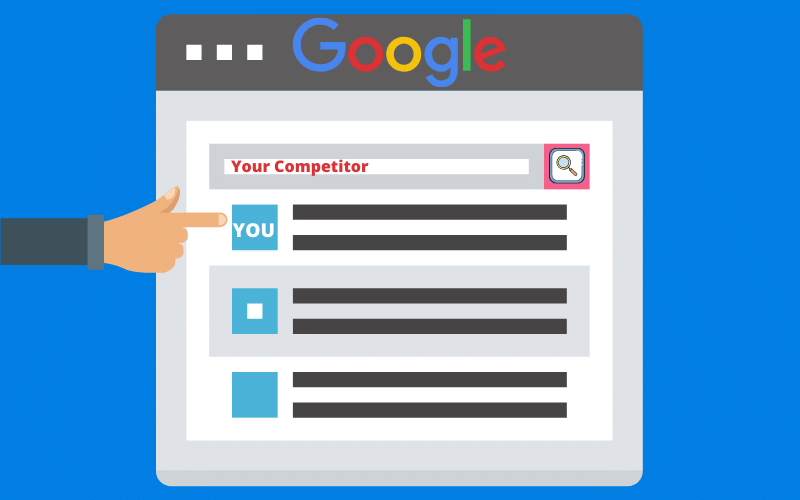
Competitor keywords represent a specialized subset of non-brand terms that enable businesses to intercept traffic searching for rival brands
Conquesting campaigns—the practice of bidding on competitor keywords—can deliver significant competitive advantages, though they require careful execution to manage inherent costs and strategic risks
Quick Google Ads Recap
When users enter queries into search engines like Google, they encounter the Search Engine Results Page (SERP), which displays a carefully curated mix of paid advertisements (managed through Google Ads) and organic listings (driven by SEO strategies). Google Ads operates on an auction-based system where advertisers bid on specific keywords to secure prime real estate on these results pages. The platform's sophisticated algorithm considers both bid amounts and ad quality to determine placement, creating opportunities for strategic marketers to capture high-value traffic at crucial decision moments.
Paid vs Organic Search Results
| Feature | Google Ads (SEM) | SEO (Organic) |
|---|---|---|
| Cost Structure | Pay per click | No direct cost |
| Speed to Results | Immediate | Long-term |
| Keyword Control | Precise bidding | Algorithm dependent |
| Position Control | Bid-based | Ranking factors |
Brand Vs. Nonbrand
The foundation of effective keyword strategy rests on understanding the distinction between brand and non-brand terms. Brand keywords incorporate your company's name, product names, or proprietary terminology—essentially any search query that demonstrates existing awareness of your business. Consider Apple's ecosystem: searches for "iPhone 15 Pro," "MacBook Air," or "Apple Store hours" all represent brand keywords because they explicitly reference the company's identity.
Non-brand keywords, conversely, reflect broader user intent without company-specific language. Terms like "smartphone," "laptop under $1000," or "wireless earbuds review" capture users earlier in their research journey. These keywords typically face higher competition and require more sophisticated messaging to convert searchers who haven't yet formed brand preferences. The strategic balance between these keyword types often determines campaign profitability and long-term brand growth.
Keyword Category Breakdown
Brand Keywords
Keywords containing your company or product name. These typically have higher conversion rates as users are specifically seeking your brand.
Non-Brand Keywords
Generic terms related to your industry or product category. These capture users in earlier stages of the buying process.
Competitor Keywords
Your competitors' brand terms that you can bid on as part of your non-brand strategy to intercept their traffic.
Competitor Keywords
While the brand versus non-brand framework provides essential structure, competitor keywords occupy a unique strategic position that savvy marketers cannot ignore. These terms represent your competitors' brand keywords—their proprietary territory that you can strategically infiltrate. From your competitor's perspective, "Nike running shoes" constitutes a brand keyword. From Adidas's viewpoint, however, it represents a conquest opportunity within their non-brand strategy.
This distinction matters because competitor keywords combine the high intent of brand searches with the acquisition potential of non-brand campaigns. Users searching for specific competitor brands have moved beyond casual browsing—they're actively evaluating solutions, making them prime candidates for strategic interception.
Competitor keywords are technically a subset of non-brand keywords from your perspective, but they represent brand keywords for your competitors.
Example: Samsung Conquest
Consider the strategic thinking behind Samsung's approach to competing with Apple in the premium smartphone market. As Samsung's CMO, you recognize that potential iPhone buyers represent high-value customers with established premium device preferences—exactly the audience Samsung needs to reach.
The conquest strategy involves bidding on iPhone-related searches like "iPhone 15 camera," "Apple phone deals," or "iPhone vs Android." When these searches trigger Samsung ads, the creative messaging must immediately acknowledge the user's original intent while presenting compelling alternatives. Effective ad copy might emphasize superior camera capabilities, customization options, or value propositions that directly address common iPhone limitations.
The accompanying landing page becomes equally critical, requiring tailored content that respects the visitor's initial brand preference while systematically building the case for Samsung. This might include side-by-side comparisons, expert reviews, or special offers designed specifically for brand switchers. The entire funnel must demonstrate understanding of why someone chose to research iPhones while providing irresistible reasons to consider Galaxy alternatives.
Samsung iPhone Conquesting Strategy
Keyword Research
Identify high-volume iPhone and Apple-related search terms that align with Galaxy phone features and benefits
Ad Copy Creation
Craft compelling messaging that directly compares Galaxy advantages over iPhone features
Landing Page Optimization
Design dedicated pages that address iPhone users' specific needs while highlighting Galaxy superiority
Value Proposition
Clearly articulate why Galaxy phones offer better value, features, or experience than iPhones
The Power of Conquesting
Strategic conquesting campaigns deliver measurable competitive advantages when executed with precision and adequate resources. Understanding these benefits helps justify the additional complexity and investment required for effective competitor targeting.
Brand visibility expansion represents the most immediate benefit—your company gains valuable exposure among audiences actively researching established competitors. This visibility proves especially powerful for emerging brands seeking to challenge market leaders or established companies launching new product categories.
High-intent traffic conversion rates often exceed standard non-brand campaigns because competitor searchers demonstrate clear purchase intent and category interest. These users have progressed beyond awareness stages, making them more likely to convert when presented with compelling alternatives and appropriate incentives.
Cross-shopping mitigation becomes increasingly important as consumers conduct more thorough research before major purchases. Conquesting ensures your brand remains visible throughout extended evaluation processes, preventing competitors from monopolizing consideration during crucial decision phases.
Conquesting Campaign Benefits
Challenges & Risks
Despite significant opportunities, conquesting campaigns introduce operational complexities and strategic risks that require careful management and realistic expectation-setting across marketing teams.
Brand loyalty barriers represent the fundamental challenge in conquest marketing. Convincing customers actively searching for specific brands requires exceptional value propositions, compelling creative messaging, and often substantial incentives. Success depends on identifying and exploiting genuine competitor weaknesses while highlighting authentic differentiators that resonate with target audiences.
Cost management becomes particularly challenging because Google's quality score algorithm naturally favors advertisers whose brands align with search queries. Competitors bidding on their own brand terms will typically achieve higher quality scores and lower cost-per-clicks, forcing conquest campaigns to bid more aggressively while accepting reduced profit margins or lower ad positions.
Competitive retaliation cycles can quickly escalate into mutually destructive bidding wars where increasing advertising costs benefit only the advertising platforms. Smart conquest strategies include monitoring competitor response patterns and establishing clear budget parameters to avoid prolonged escalation cycles that erode industry profitability without delivering sustainable competitive advantages.
Conquesting campaigns typically result in lower quality scores for competitor keywords, leading to higher costs per click and increased advertising spend.
Key Challenges to Consider
Brand Loyalty Override
Convincing customers to switch from their preferred brand requires exceptional messaging and compelling value propositions.
Cost Management
Lower quality scores on competitor terms result in higher bidding costs and reduced campaign profitability.
Competitive Retaliation
Competitors can easily reciprocate by bidding on your brand terms, potentially escalating into costly bidding wars.
Master Digital Marketing
Ready to elevate your digital marketing expertise and implement sophisticated strategies like conquesting? Explore our comprehensive training programs designed for marketing professionals seeking competitive advantages:
Next Steps for Implementation
Build foundational knowledge across all digital channels
Master platform-specific skills for effective campaign management
Learn advanced tactics for competitive positioning and market penetration