What You'll Master in This GreenSock Tutorial:
Club GreenSock membership benefits, accessing premium Club GreenSock resources, leveraging GSAP's powerful SplitText utility, creating sophisticated quote animations, implementing character-by-character name reveals, and utilizing the revert() method for clean DOM management
Exercise Preview
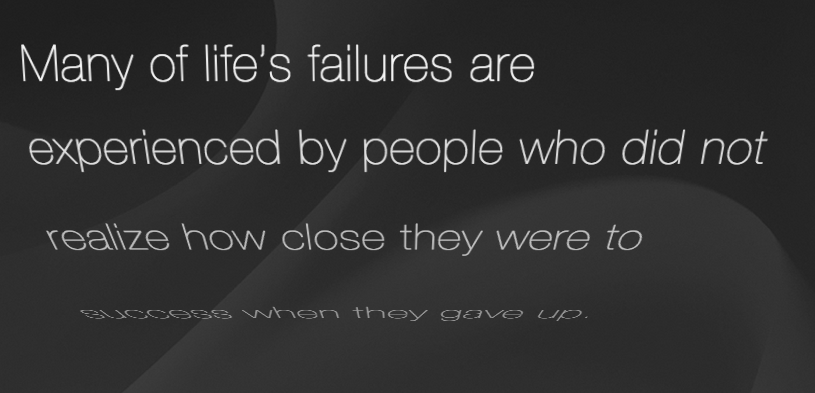
Exercise Overview
In this comprehensive exercise, you'll dive deep into one of GSAP's most powerful premium utilities: SplitText. This sophisticated tool revolutionizes text animation by intelligently breaking apart HTML text elements into individual characters, words, and lines—each wrapped in its own div element for granular animation control. The result? Professional-grade text effects that would otherwise require complex manual DOM manipulation and extensive custom code.
SplitText's true power lies in its seamless integration with GSAP's animation ecosystem, enabling you to create everything from subtle fade-ins to dramatic 3D text reveals that capture attention and enhance user experience across modern web applications.
Understanding Club GreenSock
SplitText represents just one gem in Club GreenSock's extensive collection of premium utilities, plugins, and exclusive features available to Shockingly Green members. This professional membership tier ensures you're always at the cutting edge of web animation technology, with early access to new features, critical bug fixes, beta releases, and comprehensive demo source code that accelerates your development workflow.
Your Shockingly Green membership unlocks SplitText alongside GSAP's complete suite of advanced animation tools:
| DrawSVGPlugin: | Delivers precise control over SVG stroke animations, enabling everything from signature effects to complex path reveals that bring vector graphics to life. |
| Physics plugins: | Physics2DPlugin and PhysicsPropsPlugin revolutionize animation by letting you define motion through real-world physics properties—velocity, acceleration, friction—rather than static end values, creating naturally fluid movement. |
| ThrowPropsPlugin: | Simulates realistic thrown object behavior with momentum-based animations that smoothly decelerate to a natural stop. Essential for touch interfaces and interactive elements that respond to user gestures. |
| ScrambleTextPlugin: | Creates that coveted "digital decoding" effect where text appears to decrypt character by character—perfect for tech-forward interfaces, hover states, and cyberpunk-inspired designs. |
Noble Desktop students receive automatic enrollment as Shockingly Green Club GreenSock members for one full year—a significant value-add to your educational investment. Your instructor will provide your personalized Club GreenSock credentials, ensuring immediate access to the premium resources required for this lesson and beyond.
Independent learners can secure their Shockingly Green Club membership at greensock.com/club for $99 annually—a modest investment considering the professional-grade tools and ongoing updates you'll receive. Once enrolled, your credentials unlock immediate access to all premium files and resources needed for this advanced exercise.
Club GreenSock Membership Benefits
Accessing Your Members-Only Club GreenSock Resources
Follow this streamlined process to download your premium Club GreenSock files and get started with professional-grade animation development:
Navigate to greensock.com in your preferred browser
Click Login/Sign Up in the top-right corner
Enter your Email Address and Password, then click Login
Once authenticated, locate and click the prominent green Download GSAP button
In the modal dialog, select Download zip with bonus content to access premium features
After download completion, extract the .zip file to reveal your GreenSock-ShockinglyGreen-js folder
Navigate to GreenSock-ShockinglyGreen-js → src → uncompressed
Select and copy all files within the uncompressed folder (ensure you're copying contents, not the parent folder)
Navigate to your project directory: Class Files → yourname-GSAP Class → Quote with SplitText → js
Paste the copied files into the empty gsap folder. Your properly configured gsap directory should contain:
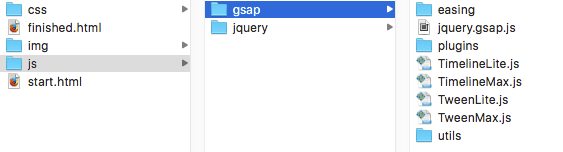
Club GreenSock Membership Benefits
Analyzing the Completed Animation
Before diving into development, let's examine the sophisticated animation we'll be building to understand the visual goals and technical requirements:
Launch Google Chrome for optimal GSAP performance and debugging capabilities
Open the file browser with Cmd–O (Mac) or CTRL–O (Windows), navigate to Desktop → Class Files → yourname-GSAP Class → Quote with SplitText, and launch finished.html
Observe how the quotation elegantly animates line-by-line with 3D perspective effects, followed by "THOMAS EDISON" revealing character-by-character with sophisticated rotational transforms. These professional-grade animations demonstrate SplitText's power when combined with GSAP's 3D capabilities.
Refresh the page multiple times to analyze the animation's timing, easing, and visual hierarchy. If animations fail to appear, verify your Shockingly Green Club GreenSock membership status and confirm proper file installation.
Deconstructing the DOM Architecture & JavaScript Foundation
Understanding the underlying structure is crucial for building scalable, maintainable animations. Let's examine how clean HTML combines with powerful JavaScript to create complex effects:
Open your preferred code editor and load yourname-GSAP Class → Quote with SplitText → start.html (or import the entire Quote with SplitText directory for project-based editors)
Preview start.html in Chrome. Notice the static presentation—all visual elements are positioned correctly, but animations remain dormant until we implement them
Return to your editor and examine the elegantly simple HTML structure on lines 44–47:
<div class="wrapper">
   <div id="quote">Many of life's failures are experienced by people who did not realize how close they were to success when they gave up.</div>
   <div id="author">THOMAS EDISON</div>
</div>
This minimal markup demonstrates best practices: semantic HTML that's animation-ready without unnecessary complexity. The quote and author IDs provide precise targeting for our SplitText operations.
Examine our foundational JavaScript variables on line 56:
$(document).ready(function(){
    var quote, author, tl;
These variables will hold our SplitText objects for the quote and author elements, plus tl for our master TimelineLite instance that orchestrates the entire animation sequence.
Note the critical 3D setup on line 59:
TweenLite.set(["#quote", "#author"], {perspective:400});This establishes shared 3D space for both elements. By applying perspective to the parent containers, all child elements (created by SplitText) will share the same vanishing point, ensuring visual consistency across the animation sequence.
Perspective Vs. TransformPerspective: A Critical Distinction
perspective applies to parent elements, creating a shared 3D environment where all children reference the same vanishing point—ideal for cohesive animation sequences.
transformPerspective applies to individual elements, giving each its own vanishing point—perfect when you need elements to behave independently in 3D space.
This fundamental difference dramatically impacts visual outcomes. For comprehensive examples and technical details, reference the complete guide at greensock.com/CSS3
Perspective Property Comparison
| Feature | perspective | transformPerspective |
|---|---|---|
| Applied To | Parent element | Individual elements |
| Vanishing Point | Shared among children | Unique for each element |
| Use Case | Unified 3D space | Independent 3D effects |
Mastering GreenSock's SplitText Utility
SplitText operates as a standalone utility rather than a traditional plugin, meaning it functions independently of GSAP's animation components while integrating seamlessly when needed. This architecture makes it incredibly versatile for both animated and static text manipulation tasks.
Around line 50, import the SplitText utility with proper script tag placement:
<script src="js/gsap/TweenMax.js"></script>
<script src="js/gsap/utils/SplitText.js"></script>
<script src="js/jquery/jquery-1.10.1.min.js"></script>
Around line 61, instantiate your first SplitText object using default behavior:
TweenLite.set(["#quote", "#author"], {perspective:400});

quote = new SplitText("#quote");
Save and preview in Chrome to witness SplitText's immediate DOM transformation
Right-click the quotation and select Inspect Element. Examine the generated markup structure:

Expand the nested divs and hover over individual elements. Watch as SplitText's generated containers highlight corresponding text segments on the page, revealing how default behavior creates character, word, and line divisions simultaneously.
While comprehensive, this default approach generates unnecessary DOM elements for our specific use case. We need line-based splitting exclusively.
Return to your editor and refine the SplitText configuration for optimal performance:
quote = new SplitText("#quote", {type:"lines"});
SplitText Configuration Options
Master these three fundamental splitting modes:{type:"chars"} // Character-level splitting
{type:"words"} // Word-level splitting
{type:"lines"} // Line-level splitting{type:"chars, words, lines"}Save and preview. Re-inspect the quotation element to confirm clean line-only splitting
Add debugging code to examine SplitText's generated data structure:
quote = new SplitText("#quote", {type:"lines"});
console.log(quote.lines);
This console output reveals the lines array containing DOM references to each generated line element—the foundation for our staggered animations.
Arrays store multiple values with zero-based indexing (0, 1, 2, etc.), making them perfect for iterative animations where each element receives slightly different timing or properties.
Save and preview in Chrome
Open Chrome DevTools with Cmd–Opt–J (Mac) or CTRL–Shift–J (Windows)
Reload and expand the console array output:
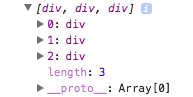
Each array element represents a line div, providing direct DOM access for individual animation control. The array length corresponds to visible lines, which varies based on browser width and text reflow.
Remove the debugging code and create the author SplitText object:
quote = new SplitText("#quote", {type:"lines"});
author = new SplitText("#author", {type:"chars"});
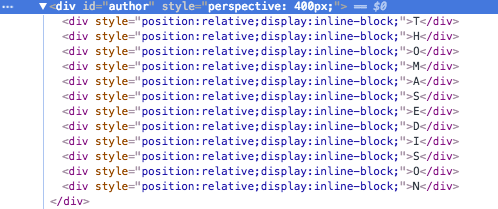
Character-level splitting enables the sophisticated letter-by-letter reveal effect for Edison's name.
Save, preview, and inspect the author element to confirm character-level DOM structure:
Orchestrating the Quote Animation Sequence
With our SplitText objects properly configured, we'll now build a sophisticated animation timeline that brings the quote to life with professional 3D effects and precise timing control.
Create your master timeline controller:
quote = new SplitText("#quote", {type:"lines"});
author = new SplitText("#author", {type:"chars"});

tl = new TimelineLite();
Implement the core staggered animation targeting our lines array:
tl = new TimelineLite();
tl.staggerFrom(quote.lines, 0.6, {opacity:0}, 0.1)
By targeting quote.lines, we're animating every element in the generated array with 0.6-second duration and 0.1-second stagger delay between elements.
Save and preview to observe the foundational fade-in effect. Now let's elevate it with 3D transformation:
Add rotational dynamics for visual impact:
tl.staggerFrom(quote.lines, 0.6, {opacity:0, rotationX:-90}, 0.1)Preview the enhanced animation. The 3D rotation creates depth, but the default transform origin needs refinement for optimal visual flow
Optimize the rotation axis for natural movement:
tl.staggerFrom(quote.lines, 0.6, {opacity:0, rotationX:-90, transformOrigin:"50% top"}, 0.1)Test the improved top-hinged rotation effect, then add z-axis depth for dramatic perspective:
tl.staggerFrom(quote.lines, 0.6, {opacity:0, rotationX:-90, transformOrigin:"50% top -200"}, 0.1)The -200 z-axis value positions the rotation center 200 pixels behind each line element, creating a pronounced 3D carousel effect as lines swing into view.
In 3D space: X-axis controls left-right movement, Y-axis manages up-down motion, and Z-axis determines depth (forward-backward positioning relative to the viewer).
Save and preview the final quote animation. Experiment with different z-axis values (try -100, -300, or -500) to understand how depth affects the visual drama of the rotation effect.
Crafting the Author Name Reveal
Now we'll create a complementary character-by-character animation that showcases Thomas Edison's name with equally impressive 3D effects, demonstrating SplitText's versatility across different splitting modes.
Chain the author animation to your existing timeline:
tl.staggerFrom(quote.lines, 0.6, {opacity:0, rotationX:-90, transformOrigin:"50% top -200"}, 0.1)
  .staggerFrom(author.chars, 0.6, {opacity:0}, 0.02)
The chained method ensures sequential timing, while the faster 0.02 stagger creates rapid-fire character reveals. The author.chars array contains individual character elements for granular control.
Save and preview to confirm proper timing and sequencing between quote and author animations
Enhance with dramatic 3D character rotation:
.staggerFrom(author.chars, 0.6, {opacity:0, rotationX:180}, 0.02)Save and preview the completed animation sequence. The 180-degree rotation creates a spectacular spinning effect as each character materializes, demonstrating how SplitText enables effects that would be nearly impossible with traditional CSS or vanilla JavaScript approaches.
Implementing the Revert() Method for Clean DOM Management
Professional web applications require clean DOM management. While SplitText creates powerful animation possibilities through DOM manipulation, you may want to restore original markup after animations complete—eliminating unnecessary elements and reducing memory overhead.
Configure timeline completion callback around line 64:
tl = new TimelineLite({onComplete:revert});Define the cleanup function after your animation sequence (around line 68):
.staggerFrom(author.chars, 0.6, {opacity:0, rotationX:180}, 0.02)

function revert() {
   quote.revert();
   author.revert();
}
This function executes automatically when the TimelineLite completes, restoring both elements to their original HTML structure while preserving visual appearance.
Save and preview the complete experience
After animation completion, inspect either text element to confirm DOM cleanup—all generated wrapper divs disappear, leaving clean, semantic markup that's identical to the original HTML structure.
This professional approach ensures your animations perform beautifully without leaving technical debt in the DOM. For advanced SplitText techniques, configuration options, and integration patterns, consult the comprehensive documentation at greensock.com/docs/Utilities/SplitText
Using the Revert Method
Implementation Checklist
Ensures revert function runs after all animations finish
Restores original text structure and removes generated divs
Verify that split divs disappear after animation completes